What the VALORANT Champions Shanghai group stage reveals about the 2026 world title race
You can order the same kind of articles for your own video to boost it on YouTube and Google. Just message the Telegram bot @sat_sit_bot. It writes articles around your video, embeds the video and publishes them on popular niche websites (no ads). Try it free: 50 articles on us.
· based on the channel VALORANT Champions Tour
Key takeaways
- Sixteen teams from Americas, CN, EMEA and Pacific compete at VALORANT Champions Shanghai.
- The event runs from September 24 to October 18, with the group stage deciding who reaches the playoff bracket.
- Day 7 of the group stage was streamed by the VALORANT Champions Tour channel as a full-length VOD.
- Two different Masters champions in 2026 means the Shanghai winner settles the year's hierarchy.
- Viewers flagged repeated technical pauses and questioned the depth of the CN region's representatives.
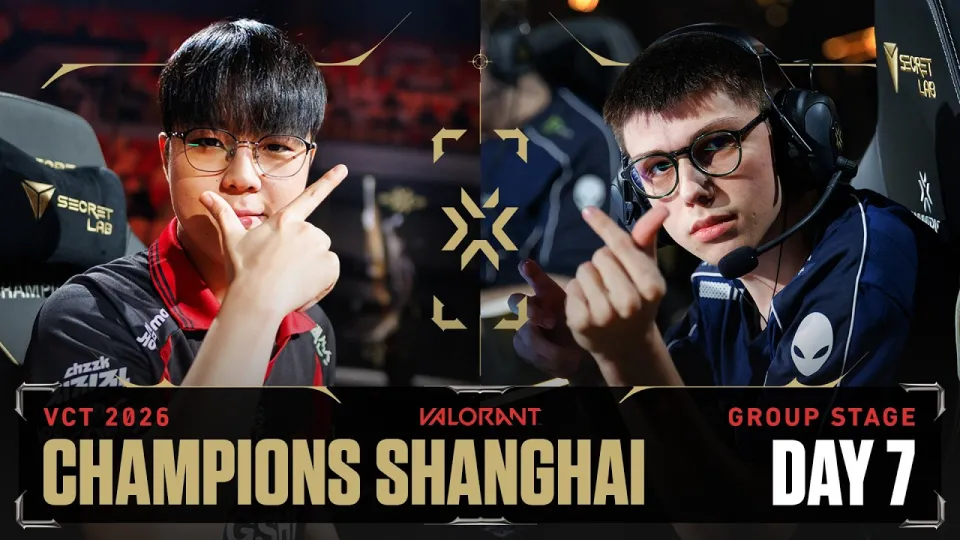
VALORANT Champions Shanghai is the final international event of the 2026 VCT season, where sixteen teams from the Americas, CN, EMEA and Pacific regions compete for the world championship title between September 24 and October 18. The group stage, including the Day 7 broadcast published by the VALORANT Champions Tour on October 1, decides which teams advance to the playoff bracket and which go home before the trophy rounds. For schedules, brackets and live updates, the official esports account at VALORANT Esports on X is the fastest source.
How the VALORANT Champions Shanghai group stage is structured
The group stage is the filter that turns a sixteen-team field into a playoff bracket, and every match in it carries seeding consequences. Teams are split into groups, play a round-robin or double-elimination format depending on the VCT rulebook for the event, and the top finishers move on while the rest are eliminated. Because Champions is the last tournament of the year, group-stage results also decide final Circuit points standings and the narrative each region carries into the offseason.
Day 7 sits deep enough into the schedule that most groups have already produced clear favorites and desperate underdogs. That is why the broadcast runs long: full-length VODs from this stage regularly stretch past the five-hour mark once map picks, tech pauses and analyst segments are included. The Day 7 stream follows that pattern, which is why community timestamps exist to help viewers skip straight to the matches they care about.
The four regions and what each one brings to Shanghai
Shanghai is a four-region tournament, and the balance of power between Americas, CN, EMEA and Pacific is the single biggest storyline of the group stage. Each region qualifies its own representatives through the 2026 VCT circuit, so the group stage doubles as a direct comparison of regional depth.
- Americas traditionally brings aggressive, aim-heavy compositions and deep playoff experience.
- EMEA is known for structured default play, disciplined utility usage and strong mid-round calling.
- Pacific has produced some of the most mechanically gifted rosters in recent VCT history and often overperforms expectations at international events.
- CN enters with home crowd support in Shanghai but with the shortest international track record of the four regions.
The description of the Day 7 broadcast frames the event around a generational shift: two different Masters champions were crowned during the 2026 season, and Shanghai is where those results get settled once and for all. That framing matters for the group stage because it means no single region arrives as an obvious favorite.
What Day 7 of the group stage actually delivered
The Day 7 broadcast is a full tournament day rather than a highlight reel, which makes it the most useful VOD for anyone studying how the Shanghai meta is developing. Matches on the day featured the usual mix of set-piece executes and improvised retakes, and the stream includes the analyst desk breaking down map vetoes between games.
One recurring theme in the chat and comments under the VOD is the number of technical pauses. Multiple viewers counted an "endless series of tech pauses," and one popular comment offered a spoiler-blocking timestamp list partly because pauses shift the timing of every match. For anyone watching the VOD after the fact, that is a practical warning: the broadcast timeline does not match the in-game timeline, so match start times drift later than the schedule suggests.
Another moment viewers singled out was a Yoru clone that briefly looked like it was helping hold a site, a reminder of how much of the Shanghai meta runs through duelist utility and fake-out plays. Small moments like that are why full VODs still matter even in an era of condensed highlights.
Reading the criticism of the CN representatives
The most heated discussion around Day 7 concerns the performance of the Chinese teams, and it is worth separating fair criticism from reaction. Several commenters argued that other regions had stronger teams that failed to qualify, and others pointed to specific mistakes: lost eco rounds, thrown 5v2 advantages and predictable utility usage once set strategies broke down.
Those complaints point to a real pattern that shows up in international VALORANT repeatedly. Teams that dominate domestically on prepared executes can struggle when opponents disrupt the setup, because the fallback layer of improvisation is thinner. Whether that is a structural issue for the CN region or a one-event slump is exactly what the rest of the group stage is supposed to answer. Home crowd pressure in Shanghai cuts both ways: it raises energy but also raises the cost of every lost round.
Why the group stage matters more at Champions than at Masters
At Masters events, a bad group stage costs you a title. At Champions, it costs you the entire season's narrative. The 2026 season already produced two different Masters champions, which means the Shanghai group stage is the last chance for any team to prove that its region deserves to be called the best in the world.
There is also a practical stakes difference. Champions carries the largest prize pool and the most Circuit points of the year, and roster decisions across all four regions are made in the weeks after the event. A team that exits in the group stage in Shanghai enters the offseason with a much weaker negotiating position than one that reaches the playoff bracket, regardless of how it performed earlier in the year.
How to watch the Day 7 VOD efficiently
Watching a five-hour tournament VOD without spoilers is a skill, and the community has already solved most of it. The most-liked comment under the Day 7 stream is a spoiler-blocking timestamp list, posted in the replies because of tech pauses shifting the timeline. If you want the full experience, watch the analyst segments; if you want efficiency, jump map to map and skip the pauses.
The official channels remain the best place to catch live matches and reruns: Twitch, YouTube and the VALORANT Esports site for brackets and news. The Day 7 broadcast itself is on the VALORANT Champions Tour channel.
Useful links
- VALORANT Esports on X — official announcements, brackets and schedule updates
- Facebook — event posts and match results
- Instagram — photos and behind-the-scenes content
- TikTok — short clips and highlight moments
- Twitch — live broadcasts of Champions matches
- Event photos on Flickr
- Official news
What Shanghai will be remembered for
The Shanghai group stage is doing exactly what a season finale should do: forcing every region to prove its depth instead of its reputation. Day 7 showed a tournament where technical issues, home pressure and regional gaps are all part of the story, and where the difference between advancing and going home comes down to how teams handle broken strategies. With two Masters titles already split in 2026, the world championship is the only result that can settle the year. Follow VALORANT Esports on X for the playoff bracket as it locks in, and watch the full Day 7 VOD on the VALORANT Champions Tour channel for the matches behind the debate.
Source: VALORANT Champions Shanghai — Group Stage — Day 7 · Markdown version
Questions & answers
How many teams play at VALORANT Champions Shanghai?
Sixteen teams qualify for the event, drawn from the Americas, CN, EMEA and Pacific regions. They are split into groups for the group stage, with the top finishers advancing to the playoff bracket and the rest eliminated before the trophy rounds.
Why were there so many technical pauses during the Day 7 broadcast?
The Day 7 stream was a full tournament day with several matches back to back, and viewers repeatedly noted long tech pauses between and during games. The pauses pushed the broadcast timeline later than the published schedule, which is why community timestamp lists for the VOD had to account for them.
Is the CN region really weaker than the other three at Champions?
The criticism under the Day 7 VOD focused on specific mistakes rather than raw skill: lost eco rounds, thrown 5v2 advantages and predictable utility once set plays broke down. Those are real patterns seen in international VALORANT, but a single group stage is a small sample, and home crowd pressure in Shanghai can amplify both good and bad moments.
Where can I watch the full VALORANT Champions Shanghai matches?
Full-length VODs, including the Day 7 group stage broadcast, are published on the VALORANT Champions Tour YouTube channel. Live matches air on the official VALORANT Twitch channel, and brackets plus schedule updates are posted through the official VALORANT Esports accounts.